LM3 - C3 - Business Planning
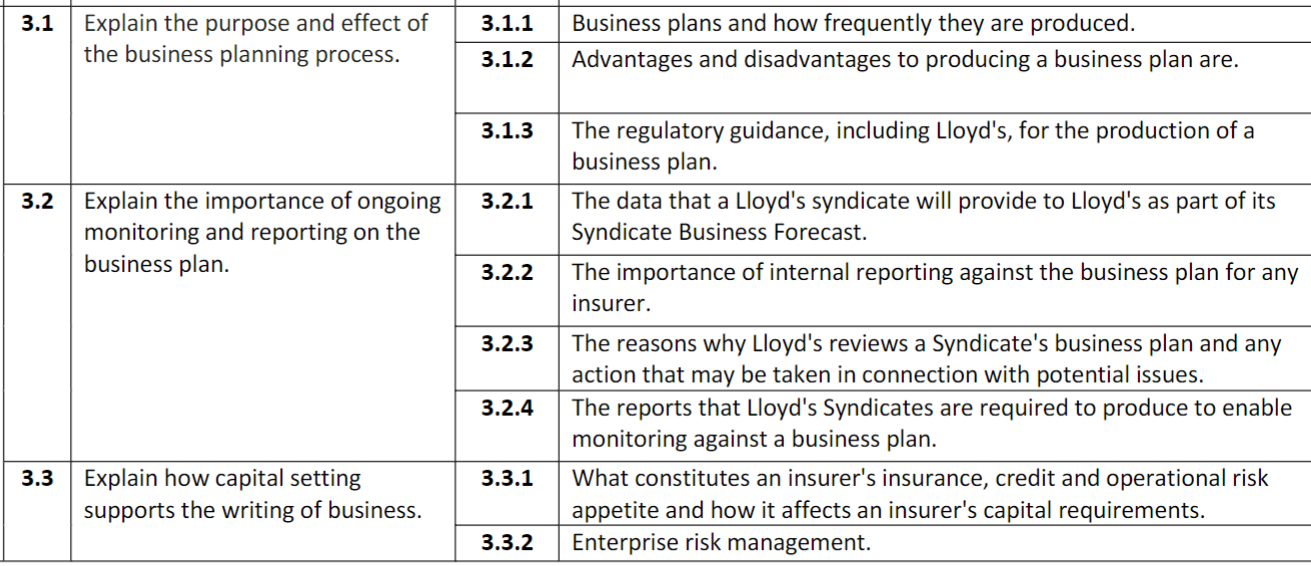
3.1 Purpose and effect of Business planning process?
Advantages:
- Clarity for key stakeholders business
- Investors for capital/equity planning
- Regulators concerns of organisation structure
Disadvantages: - Spontaneity not being allowed,
- Performance not accordance with plan
Regulatory
UK: FCA & PRA require a business plan
Reverse stress test its business plan + scenario analyses
Lloyds
Lloyds syndicate business planning process
Plan is challenged and approved by board.
Syndicate business forecast
Lloyds organises meetings with syndicates HAVE oversight on their business plan
Exchange rates
COB description
Risk code mapping
underwriting performance forecast
premium income
loss ratio composition
type of placement
premium income by risk code
premium bridge analysis : WHY LESS PREMIUM YOY? Are deduction expected to be higher?
Capacity information
Underwriting controls
RDS
Outwards reinsurance premium
External plan
...
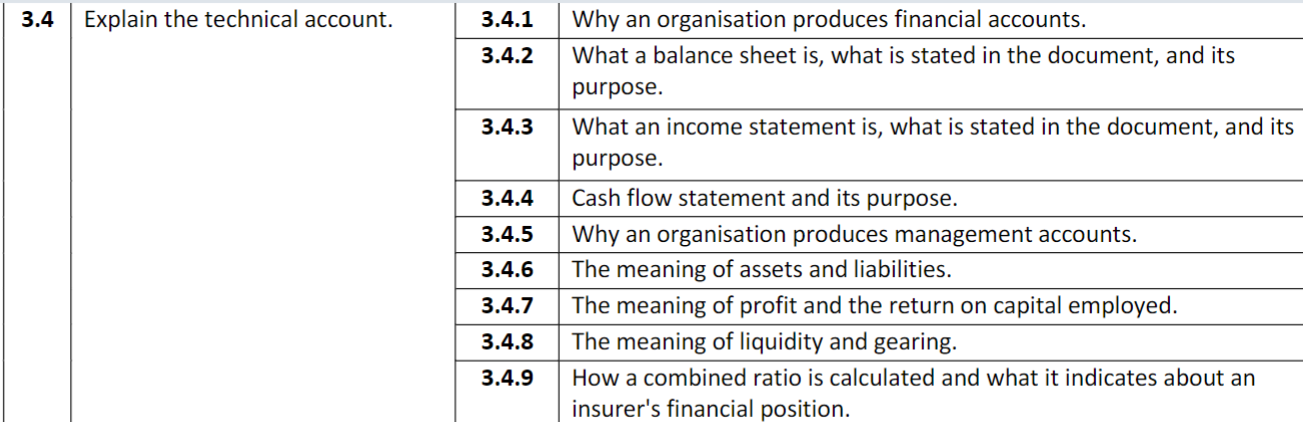
3.2 Monitoring and reporting on the plan (Map)
What is your desired destination? Routes to take? Roadblock management!
Internal reporting
- COB
- GWP
- Planned loss ratio
- Premium distribution
- Geographical spread
- Acquisition costs
- Operational costs
- Sources of business
- Reinsurance strategy
Prevent wrong turns!!!
DATA reporting to Lloyds!
- Gross quarterly data - why? monitor IBNR
- Performance management data - GWP, TP, RARC
- COB performance - UGGWP, Acq, GLR why? analysis plan
- RDS - Large Loss net and gross of reinsurance!
- Reinsurance programme - How Robust is Reinsurers! Lloyds
Importance of ACCURATE DATA
SYSC - Senior Management Arrangements systems and controls LM2 - C2 - Risk Written in London Market
MiFID = Markets in Financial Instruments Directive.
UCITS = Undertakings for Collective Investment of Transferable Securities
Principles - Data capture and reporting
1 - Underwriting profitability
10 - Governance risk management and reporting
12 - Operational Resilience
Why?
-
Issues spotted
- Refer to satisfying risk appetite
- Insurers which are AGILE will react to market events quicker and profit
-
Changing the plan
- NOT always negative... 6 months in a YOA market shifts
- management and board wants to know why and Lloyds needs to know.
-
Monitoring capital requirements
- Capital is required to run the business... Balance RISK on the business (insurance, operational, credit...)Capital requirements to deliver PLAN.
File - Lloyds capital requirement (MCR)
Solvency 2 - MCR set below which policyholder would be exposed to an unacceptable level of risk require intervention. protection from a 1 in 200 year event.
Wording used in claims data
Data cleaning tool/organising tool! select a column and then process/save to right locations
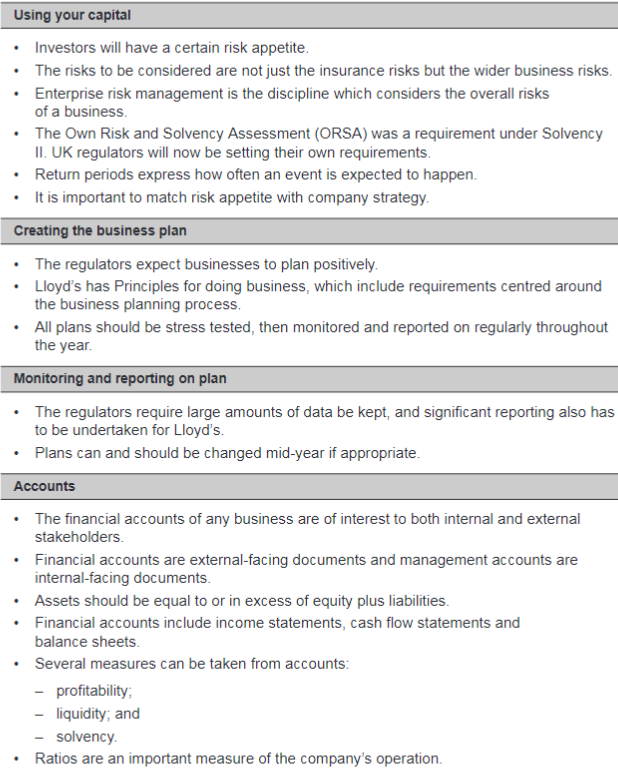
3.3 Using Capital
Matching Risk Appetite with company strategy
- Target Areas of business
- Areas of business not being written
- New market targets
- Distribution models
Total claims that exceed 65% of premium
No appetite from business from Latin America to exceed 20% of Premium income
Claims reserves to more than 2%...
probability of failure deemed to be acceptable...
PRA failure no higher than 1 in 200 year event
Return periods
Likelihood of failure is a 1 in 200 year event over a 12 month period. MEASURE of likelihood of recurrence of a particular event.
models are not always right about frequency and severity
Own Risk and solvency assessment (ORSA)
Under solvency II =
- Capital
- Governance, risk management and reporting
- Foundation level: Managing agents own assessment of the RISKS
- Advanced level: Risk management framework
Enterprise Risk Management
ERM - assess frequency and severity + mitigation + monitoring
Risk register
imagine the black swans
Unpredictability, financial impact, shock effects
WTC 2001
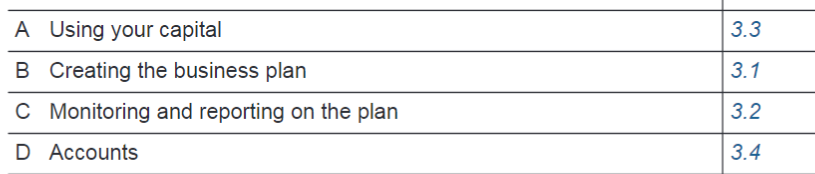
3.4 Accounts
Define minimum positive return on their capital
3 year cycle. RITC after 36 months, profitability is assessed.
GAAP - annual accounting cycle produce Income statements and balance sheet.
Metrics (Stakeholders assess)
- profitability - Money left from all costs/expenses from income
- liquidity - Cash on hand or assets
- Income -
- Expenditure (Op/Cap)
- Organisational wealth
- Working capital
- Solvency
Types of accounts
-
Financial - current position (comparable with other organisations)
-
Management accounts - used for forward planning (Internal purpose)
Balance sheet - Organisations year end
Snapshot of assets and liabilities at time X
- Provisions for unearned premium: Unearned premium from previous year rolling forward + Liability side of premium not earned
- Provisions for loss adjustments expenses: Liability side Ultimate cost of all claims incurred + IBNR.
- Reinsurance: Recoveries on asset side BUT cost on liability side
- Investments: asset side
- Debtors: premium written invoiced but not yet paid by broker
Income statement - Performance of business
....
Cash Flow - Statement of retained earnings (Redirected within organisations)
Cash flow - good premium income based on written premiums + On time payment. source = operating (Claims), investment, financing
Liquidity - how quickly assets convert to cash
Solvency - amount?
Contents of an Insurers financial accounts
Income
- Premium income = GWP
- Earned throughout policy period
- ...
Expenses
- Claims ULR
- Acquisition costs
- Opex
- Reinsurance
- Reinsurance recovery
- Tax
Capital
C3 - Business Planning#Using Capital - (Debt is not always liability check PRA definitions)
Capital must be accepted by regulators.
Solvency - Assets against liabilities
Assets and liabilities
Tangible - Physical (Cash or Buildings)
Intangible - goodwill/copyright
Insurers main liability is Claims presents, paid
Accounting equations
Assets = Equity + Liabilities
Equity = Assets - Liabilities
Page 100 check web link
Profitability and return on capital employed (Productivity)
- profitability on revenue (large or small)
- what return will be obtained on capital (At least 2x bank return uncorrelated?)
- Speculation on how much claims cost, expenses and claims reserve
Insurance is in the business of producing contracts
Solvency 2 - Risk of counterparty/credit risk (Risk of bad debt relating to premium)
Liquidity and Gearing
more liquid better to pay creditors on time
Ratio: Assets/liabilities (Need an overdraft? from bank)
How much the business borrowing compared to investors equity in the business?
Ratio: borrowing/shareholder equity measure how reliant on debt finance
Regulators only like to certain debt which doesn't appear as liability on the balance sheet
Debt and interest always gets serviced
raise money to expand the business and make enough additional profit to service debt
Combined ratio
Net premium / losses + expenses + commissions
Total Incurred losses + expenses / earned premium
Key Points